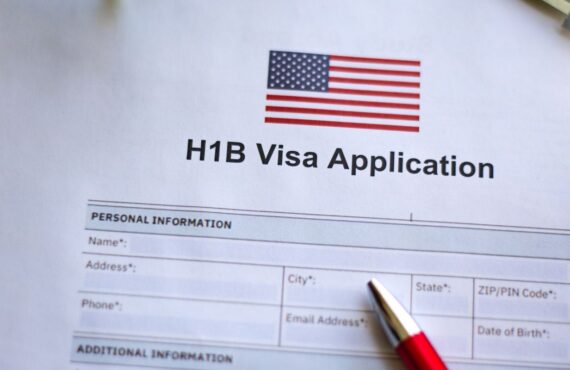
Every year, thousands of highly skilled professionals place their hopes in the H-1B visa lottery system, only to be met with disappointment. With the number of applications far outpacing available visas, the odds of selection can feel more like gambling than a strategy for building a future in the United States. If you weren’t selected in this year’s lottery, you’re not alone — and more importantly, you’re not out of options.
A powerful alternative exists for many professionals, researchers, and entrepreneurs: the EB-2 National Interest Waiver (NIW). This lesser-known immigration pathway allows certain foreign nationals to bypass the traditional labor certification and sponsorship requirements if their work serves the national interest of the United States.
In this blog post, we’ll explore why the H-1B lottery system is no longer a reliable option for many, how the NIW process works, and whether you might be eligible to apply for a green card under this category.
- The H-1B Lottery System: An Uncertain Path
The H-1B visa is designed for foreign professionals in specialty occupations, often requiring at least a bachelor’s degree. While it has long been a go-to route for individuals seeking U.S. employment, the H-1B is riddled with limitations:
- Capped availability: Only 85,000 H-1B visas are issued annually, including 20,000 for those with a U.S. master’s degree or higher.
- Randomized lottery: Applicants are chosen at random, not based on merit.
- Employer dependency: You must have a U.S. employer willing to sponsor you.
- Temporary status: H-1B is a non-immigrant visa, offering only temporary work authorization.
In 2024, over 400,000 individuals applied for the H-1B, leaving the vast majority without a path forward. This system is increasingly unreliable and fails to align with the goals of many talented individuals looking to contribute long-term to the U.S. economy.
- Enter the National Interest Waiver (NIW)
The EB-2 NIW category is a green card (immigrant visa) option under the employment-based second preference (EB-2) classification. Unlike other employment-based green card categories, the NIW waives the requirement for labor certification and a U.S. employer sponsor.
Instead, applicants must demonstrate that:
- Their work has substantial merit and national importance.
- They are well-positioned to advance their proposed endeavor.
- It would benefit the U.S. to waive the labor certification requirement.
This means that professionals can self-petition — applying on their own behalf — and secure a path to permanent residency based on their contributions and potential impact.
- Who Might Qualify for NIW?
The eligibility for NIW is broad and includes individuals across a wide range of industries and expertise. Some example profiles include:
- STEM researchers working on cutting-edge scientific or medical advancements
- Entrepreneurs leading startups with innovation or public health potential
- Educators and policy analysts impacting economic, educational, or environmental reform
- Healthcare professionals involved in underserved areas or high-need specialties
- Engineers or IT specialists contributing to national infrastructure or cybersecurity
There is no official list of qualifying professions — what matters is the impact and national relevance of your work.
- Key Benefits of NIW Over H-1B
- No employer sponsorship required
- No lottery — entirely merit-based
- Direct path to permanent residency (green card)
- Eligibility for self-petition
- More stability and independence compared to temporary H-1B
Many individuals stuck in the uncertainties of the H-1B process find the NIW pathway to be both more predictable and empowering.
- What Makes a Strong NIW Case?
Successful NIW petitions generally include:
- A detailed personal statement or plan outlining the national relevance of your work
- Documentation of your achievements (publications, patents, awards, media)
- Letters of recommendation from experts in your field
- Evidence of past and future contributions to your area of expertise
Each case is unique and requires tailored legal strategy to highlight the petitioner’s strengths and potential.
- Recent Trends and Processing Times
USCIS has become increasingly receptive to NIW applications, especially in the wake of STEM policy guidance updates in 2022. The agency is recognizing the value of high-skilled individuals who may not fit the traditional employer-sponsored model.
Average processing times:
- I-140 Petition: 6-10 months (can vary based on service center)
- Adjustment of Status or Consular Processing: Additional 8-14 months depending on the applicant’s location and category priority date
- How to Get Started
If you believe your work aligns with the national interest, the first step is to evaluate whether your qualifications match USCIS standards for NIW.
At Kameli Law, we offer personalized evaluations to help professionals determine their NIW eligibility and prepare a robust, well-documented petition. Our team has helped hundreds of applicants transition from H-1B limitations to green card stability through NIW.
Ready to Take the Next Step?
Frustrated with the H-1B lottery? There is a stronger, more sustainable path.
Find out whether you qualify—no job offer needed. It only takes a few minutes.
Let our attorneys help you build your future in the U.S. without the uncertainty of the lottery system.
About Kameli Law
Founded in 1996, Kameli Law Group has decades of experience assisting clients with employment-based immigration, especially complex green card categories like EB-2/NIW. With offices in Chicago and New York, we represent clients from across the U.S. and around the globe.